
Myanmar is a magical country. Full of things that you can’t believe that you just saw or that even exist. The skies were always a deep blue with gentle (and thankfully harmless) puffy clouds. They provided a marvelous back drop to many of our photos.
So, yes. Go now. Run, Don’t Walk. Go before Myanmar changes, as it will inevitably. Go before it gets commercialized. Go before the people change. Go while it’s still under the radar and shrouded in mystery.
We came during the rainy season, the tourist low season. Was it a mistake? Nope. We experienced the perfect mix of limited foreign tourists while it rained hardly at all. Magically we got to explore Myanmar as if all by ourselves while we only had part of 2 days washed out. One during our Habitat for Humanity build and another while travelling around Myanmar. But even the storms are remarkable. Big drops of rain accompanies by loud claps of thunder and bright flashes of lightning.
We thought we’d try something a little different with this post. We’re going to try a photo essay and try to keep the word count down.
For chronology’s sake, we started our trip in Yangon (formerly known as Rangoon). We then did our Habitat build in Bago from which we visited the Golden Rock Temple. Yangon is in the south of Myanmar with Bago and the Golden Rock Temple to the north-east, but more east and only a little north. Once back in Yangon, we began our solo exploration of Myanmar. We visited three additional cities in Myanmar. Bagan, Mandalay and Inle Lake/Nyaung U/Taunggyi region. Picture a diamond with Yangon as the southern point. Bagan is north-west of Yangon, Mandalay is directly north of Yangon and north-east of Bagan. Inle Lake/Nyaung U and Taunggyi are to the east of Bagan and to the south-east of Mandalay. So that’s your diamond. Mandalay is the farthest north we went but it’s only halfway to the extreme northern end of Myanmar.
There is a semi-autonomous region inside Myanmar called The Shan State. There is still civil and military unrest in The Shan State and the government has yet to make peace with many of the ethnic groups that make up this area. Most of the unrest is to the north and east of where we were (there was a train bombing well to the north of Mandalay shortly before we began our independent trip but were assured it was safe), and we felt none of the turmoil. That said, Taunggyi is the capital of The Shan State and the locals are fiercely proud of their hybrid (independent) situation.
So – let’s being our photo journey and as Neil deGrasse Tyson would say, “Come with us!”
Yangon
The most important thing to see in Yangon and the most important thing to see in all of Myanmar is Shwedagon Pagoda. The pagoda is said to have either have been built 2600 years ago or more recently in the 12th-16th centuries. Either way, the pagoda is said to contain 8 hairs from Gautama Buddha and several of his predecessor Buddhas (Buddha is a title, not his name). The Gautama Buddha we see most often is really the 4th in a succession of 5 Buddhas with the 5th yet to appear. On our first night in Yangon we went to a rooftop bar and restaurant. This was our view.
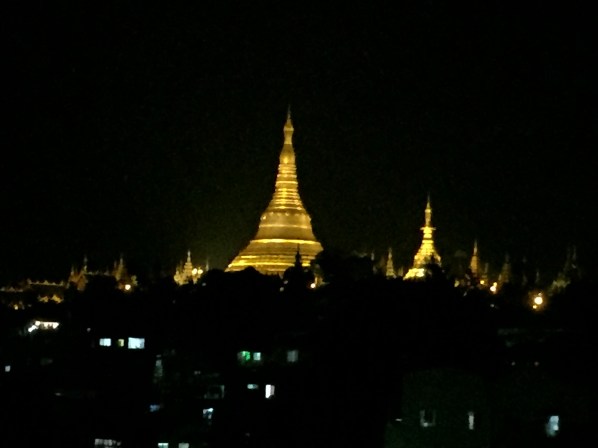
As spectacular as that view was of Shwedagon Pagoda, we went the next night to watch the sunset and saw this:
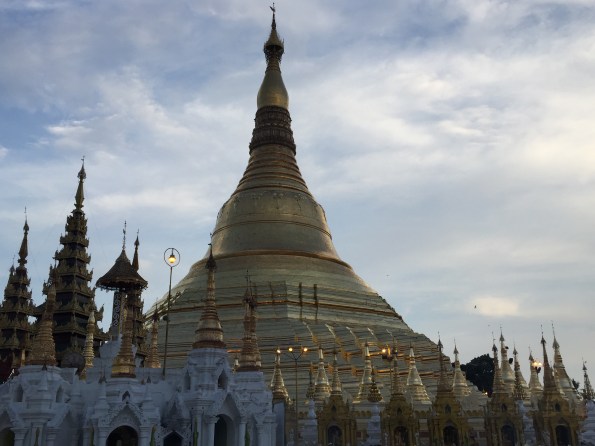
A pagoda or stupa is a domed building with a casket on top of the dome followed by a steeple. Many temples have a similar shape, but the key difference is that a pagoda or stupa cannot be entered; reverence is shown by walking around the pagoda or kneeling before it. A temple can be entered for prayer.
As the sun continued its descent, our view changed to this.
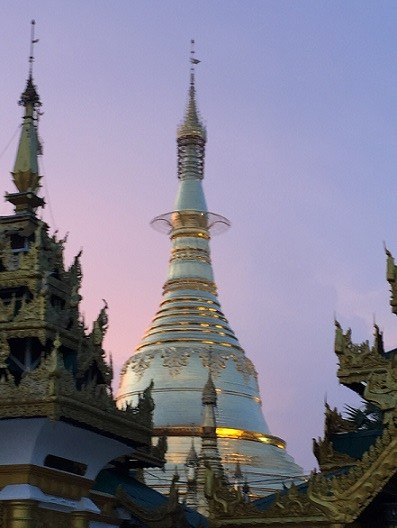
Truly spectacular. We were very moved by this start to our journey in Myanmar. Just looking at this photo brings us tremendous joy and peace. There just aren’t that many things this beautiful that we’ve come across. It simply has a calming influence. This is a devoutly spiritual place. One’s mind and spirit can’t help but take notice.
Bagan
Bagan was founded in the 2nd Century AD according to local legend but was likely built in the 9th Century. It has been peacefully ruled since and because of this stability has some of the most remarkable pagodas and temples in all of Myanmar.
The first we viewed was Shwezigon Pagoda.

Next we saw Htilominlo Guphaya-Gyi, which was built in the 13th Century. It’s undergoing renovations but is 150 feet tall and has 3 stories that can be climbed.
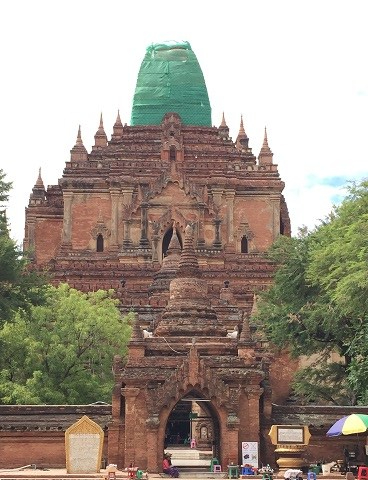
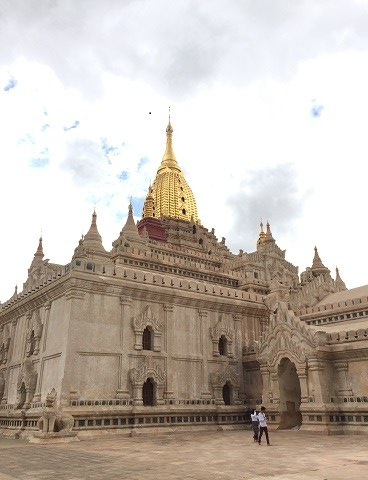
Next we visited Ananda Phaya. One of the most spectacular temples that we saw. It has served as the template for a great number of other temples in Myanmar. The golden dome is just an awesome sight in person, especially with the very powerful sun directly above us. Built in the very early 12th Century.

Because it’s a temple, you can walk inside. The temple has 4 very large Buddha statues facing each of the four cardinal directions.

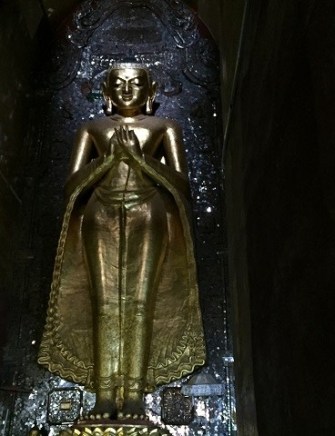
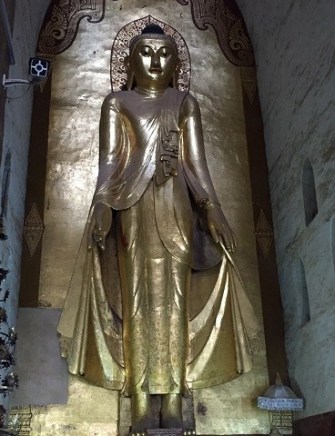
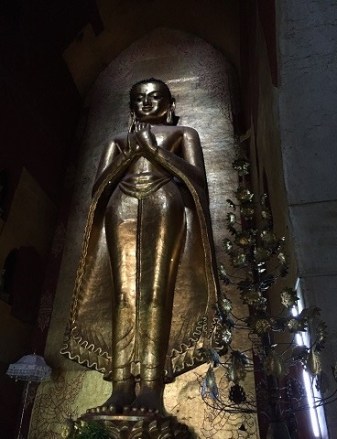
One thing to note in these photos. Each of these 4 photos represents a standing Buddha with a different hand position (actually 2 hand positions are the same, so 3 hand positions). Each standing or seated position combined with a one handed or two-handed position has a name (called a mudra). Each evokes a mental state. Buddhist rules mandate that the Buddha’s eyes be closed and that he have a calm look on his face. In total there are 28 or 32 or 37 (depending on what your read) mudras.
To understand the size of these statues, here is E standing next to a door inside Ananda Phaya. The bronze statues are taller than the doors.
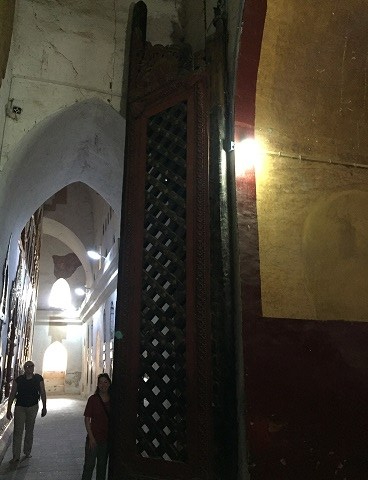
A different view of the dome atop Ananda Phaya and a bit more of the sideview.
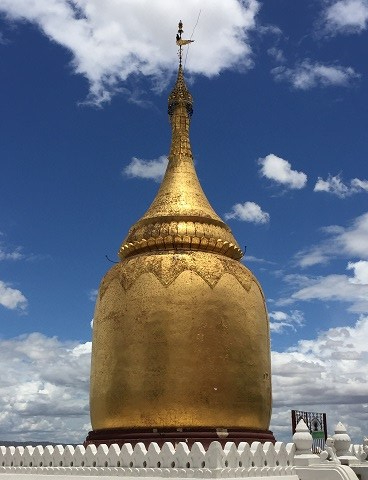
Bupaya
Built in the 3rd Century AD to celebrate the Iriwaddy River on whose banks the stupa is built. The gold leaf and the dark-blue sky contrast so beautifully. The picture was taken about noon with the sun almost directly on top of us. The sun shone so brightly that most of our photos of Bupaya were washed out. Luckily this one does the trick. The original was destroyed in a 1975 earthquake and a new statue was commissioned with a more modern design. While the shape may have changed only slightly, hopefully the gold leaf and the blue sky are true to the original.
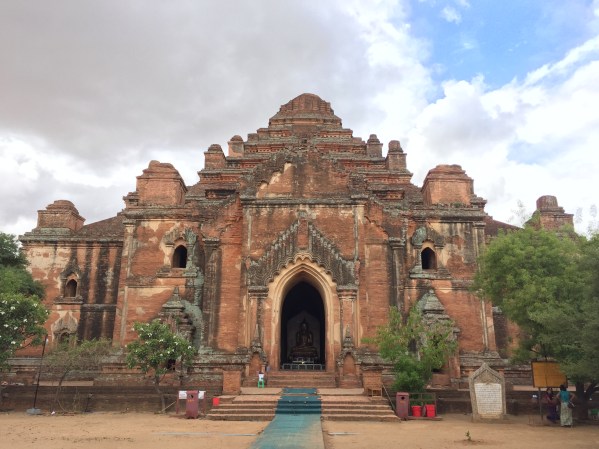
Dhammayangyi Temple
Built in the middle 12th Century, Dhammayangyi was built similarly to Ananda Phaya. So it also has 4 Buddha statues facing the four cardinal directions. That said, Dhammayangyi is the largest temple in all of Bagan and it is massive.
Sulamani Guphaya
It’s hard to properly capture how beautiful this temple was. The intricacy of the carving on both the outside and inside coupled with the paintings on the inside are just stunning. Built in the late 12 Century but still in pretty good shape.

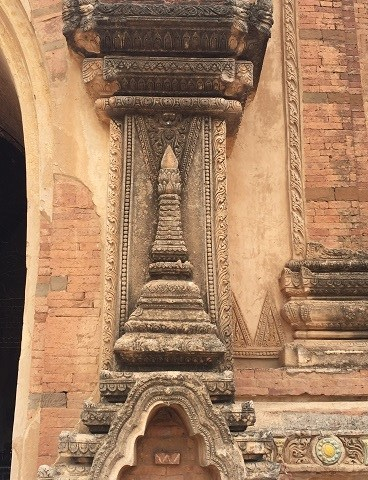
We entered the temple from one of the side entrances to avoid the hawkers, so we’re not look at its best side. But like many of the temples built of this era, there is a large bronze Buddha statue facing each of the four cardinal directions.
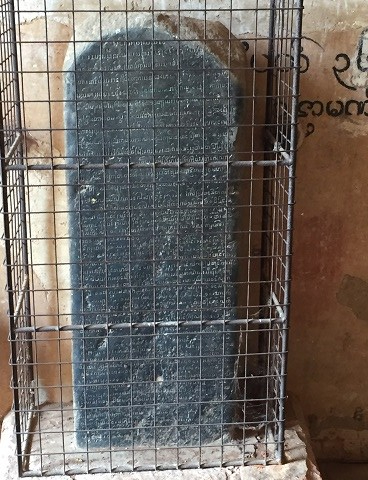
One neat feature of this temple was a stone tablet reflecting the royal order that Sulamani Guphaya be built.
Mandalay
Mandalay is the second largest city in Myanmar and home to the last royal capital. Mandalay also lies along the Irrawaddy River and is basically a large flood plain. The defining landmarks of Mandalay are its impressive royal city (complete with rectangular moat), Mandalay Hill and lots of monasteries and temples.
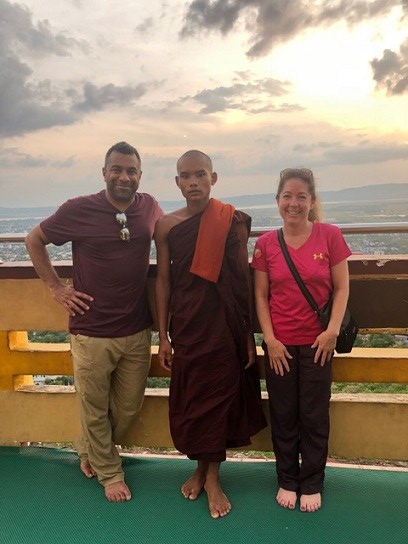
Our first day in Mandalay was a half day and we went to Mandalay Hill to visit a temple and to watch the sunset. While waiting for sunset, a monk asked to take a photo with us. He didn’t ask us for anything, but just stood quietly while his friend took our photo. This happened to us several times in Myanmar, including both with monks and local tourists, but this one felt special.
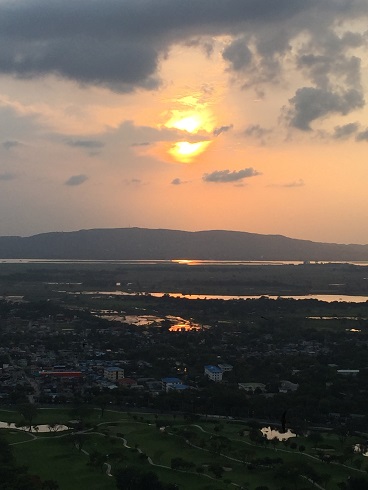
Speaking of the sunset, here it comes…setting over the Irrawaddy River in the background.
The next day we rented a car with driver and hit the following…
Mahamuni Buddha Temple
This temple is special because it houses a statue dating back to 550 BC. The Buddha himself blessed the statue as being in his likeness and is said to be only one of 5 likenesses of the Buddha (2 are in heaven and 2 in India).
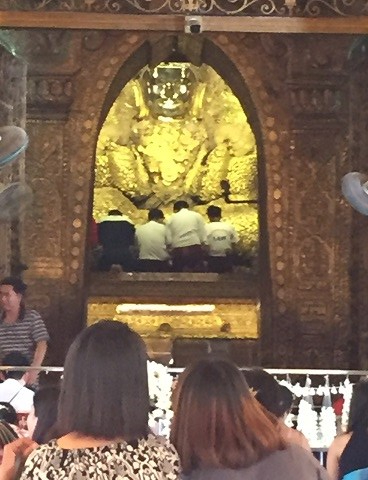
Sorry for the poor photo. Only men are allowed up front but not their cameras. The statue itself is covered in gold leaf. And over 2500 years the gold leaf has accumulated to over 6 inches thick in some places!!
Next, we headed to the Royal Palace of Mandalay, the last royal residence in Myanmar.
The main entrance…
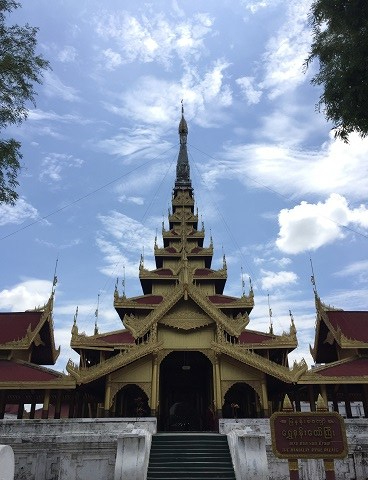
The main palace…

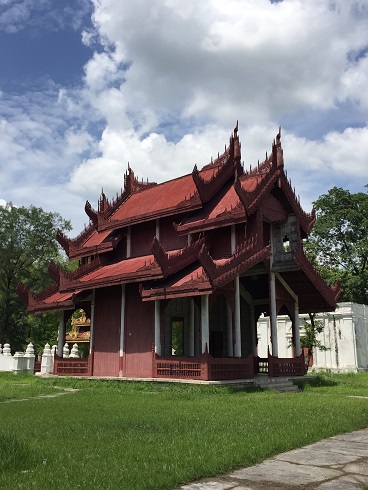
One of the many buildings that make up the royal complex…
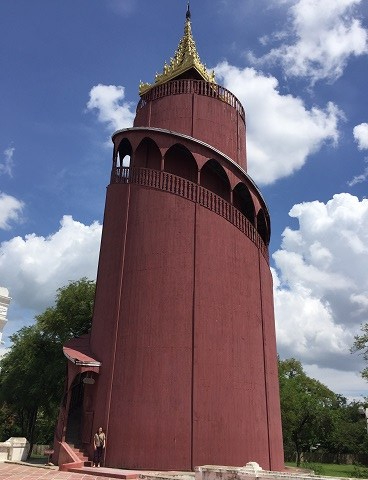
The watch tower…with E in the lower left corner
Next, we went to visit Atumashi Monastery. Not only do monks live and train in monasteries but they’re also places for locals to come pray and where young children often come for early age schooling.

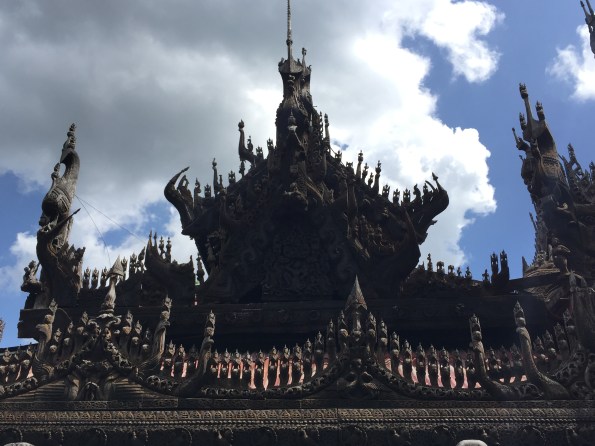
Across the street from Atumashi is Shwenandaw Monastery.

The carving work is simply stunning. And that’s teak! Very heavy and dense wood.
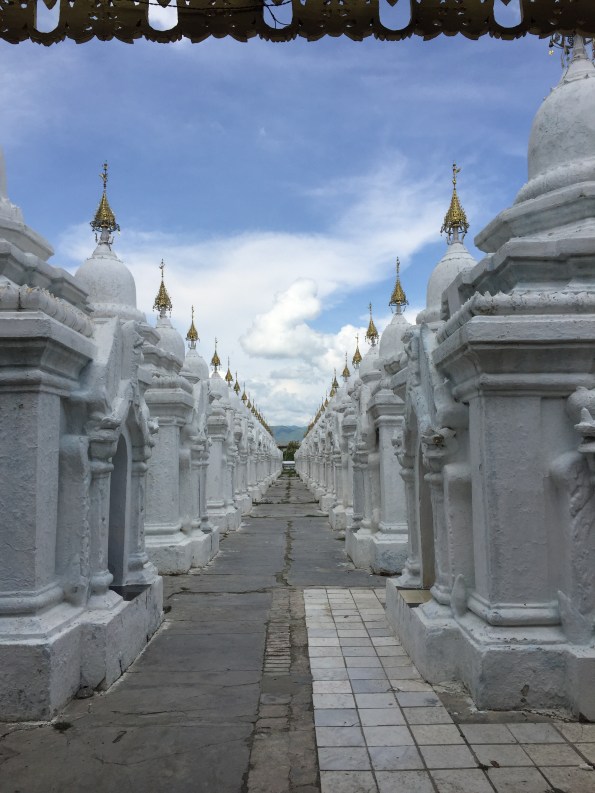
Next we went to Kuthodaw Pagoda. While the temple and stupa are impressive, the grounds are more impressive. They are said to hold the world’s largest book.
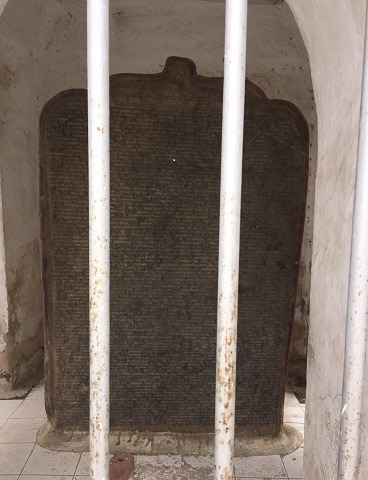
The main stupa is modeled after Shwezigon in Bagan but there are 730 stone-inscription caves that hold a stone tablet. On each side of the stone tablet, all the teachings of Theravada Buddhism are inscribed. So it’s effectively 1460 pages of text. As such, they are deemed to be the world’s largest book.
Next we went to Sandamuni Paya, which happened to be around the corner from Kuthodaw.
The main stupa at Sandamuni Paya…
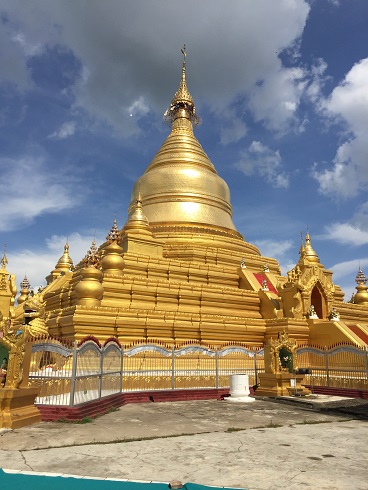
Similar to Kuthodaw, there are 1774 stone-inscription caves holding tablets on which the full teachings of the Buddha are carved.

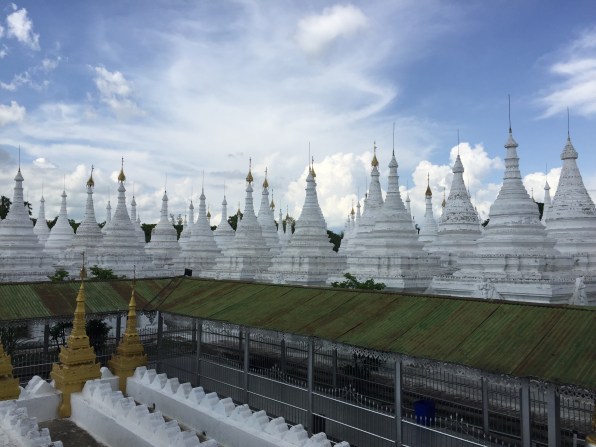

These four photos are some of our favorites that we took while in Myanmar. They combine so much of what we loved about Myanmar. The devotion to Buddhism. The beautiful architecture and art. The powerful sun, the deep blue sky and the omni-present puffy clouds in the background.
The following day, we took a day tour of the 3 ancient cities that neighbor Mandalay: Amarapura, Sagaing and Inwa. Each is a holy center and a former royal capital of (then) Burma.
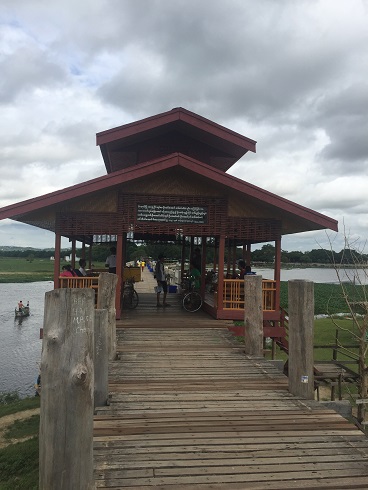
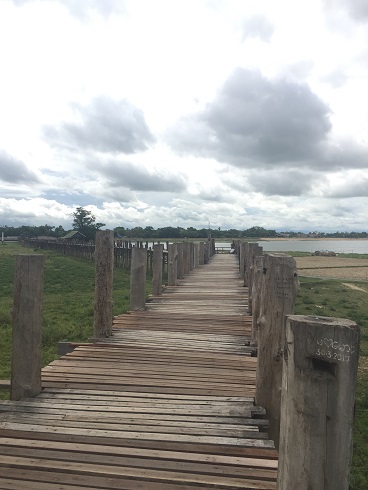
U Bein Bridge – Longest Teak Bridge in the world at 0.75 miles long. We walked halfway across the bridge and back watching the fishing boats float through while trying to avoid falling off the railing-less bridge.
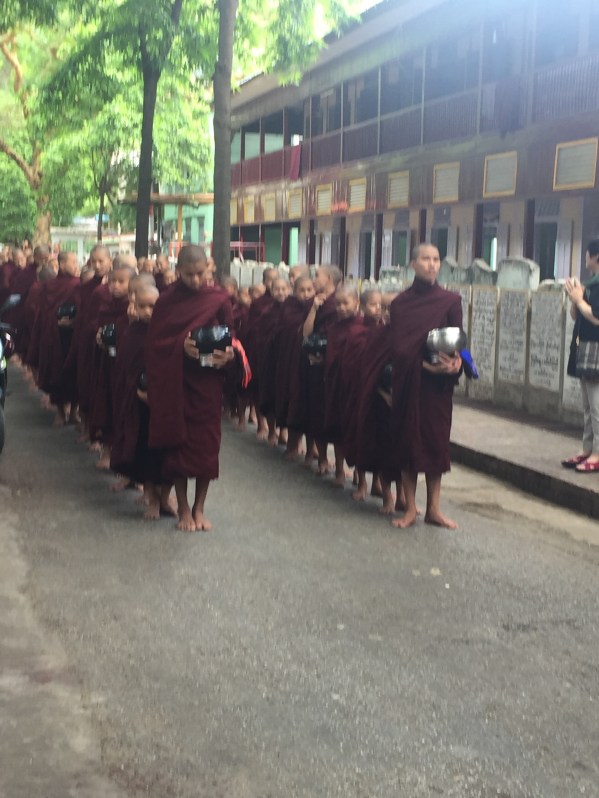
Myasetkyar Monastery – One of the largest schools for teaching children to become monks. The school was started many years ago by a single donor and has now become a source of local pride which receives sizable donations from all over Myanmar. Families donate to help build dormitories, provide meals for the prospective monks and bring gifts. The gifts (often a substantial portion of family wealth) validate a well lived Buddhist life (charity and good works being necessary to achieve nirvana).
The novice monks ran in age from what appeared to be 5-6 years old all the way through adulthood. We visited in the morning, so we got to witness the students lining up for their second and final meal of the day…at 11am in the morning. Buddhist pilgrims (from all over the world) and well-wishers line up to watch the monks and to give them gifts of money, food and other useful items.
After leaving the monks in Amarapura, we headed to Sagaing Hills –
First we went to visit the U Min Thonze Pagoda. Built into the hillside in the 1300’s, this is a whimsical pagoda full of Buddha statues with deep meaning. There are 45 Buddha statues in total – one each for every year that the Buddha spent teaching his philosophy after achieving nirvana.

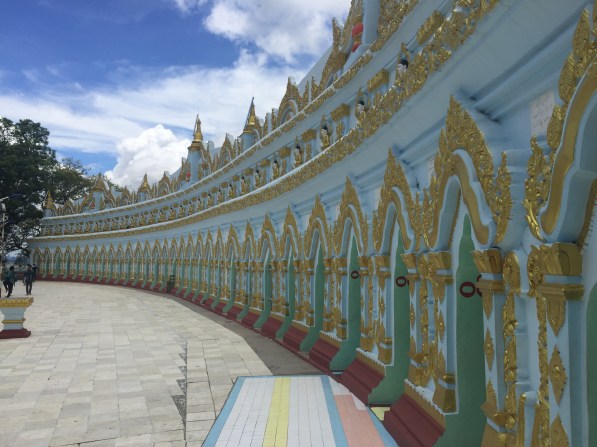
Next, we went to visit Soon U Ponya Shin Pagoda. We’re up in the hills above Sagaing so the views are as spectacular as the Pagoda itself. Please, again take note of the sun’s power, the blue sky and the gentle puffy clouds floating by.
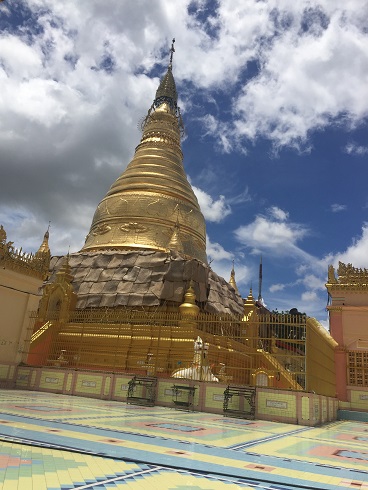
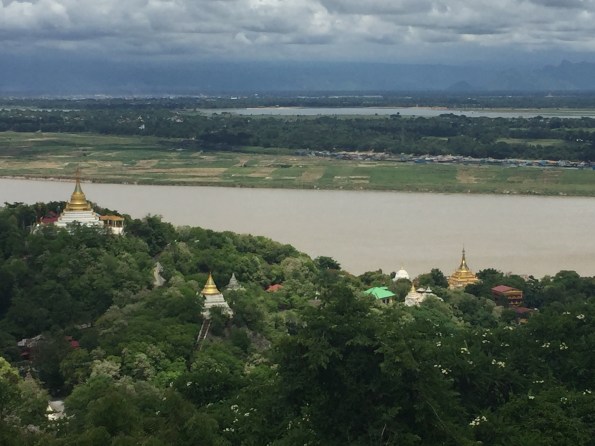
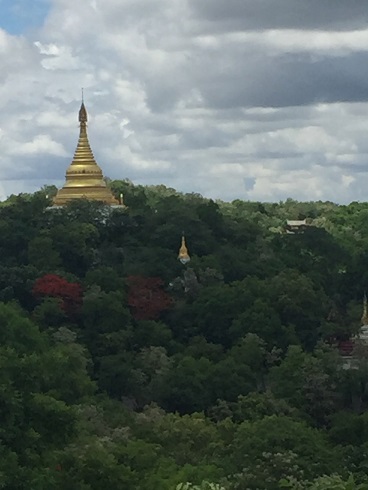
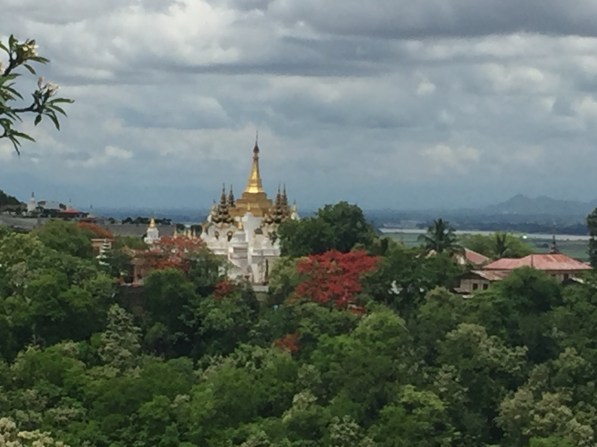
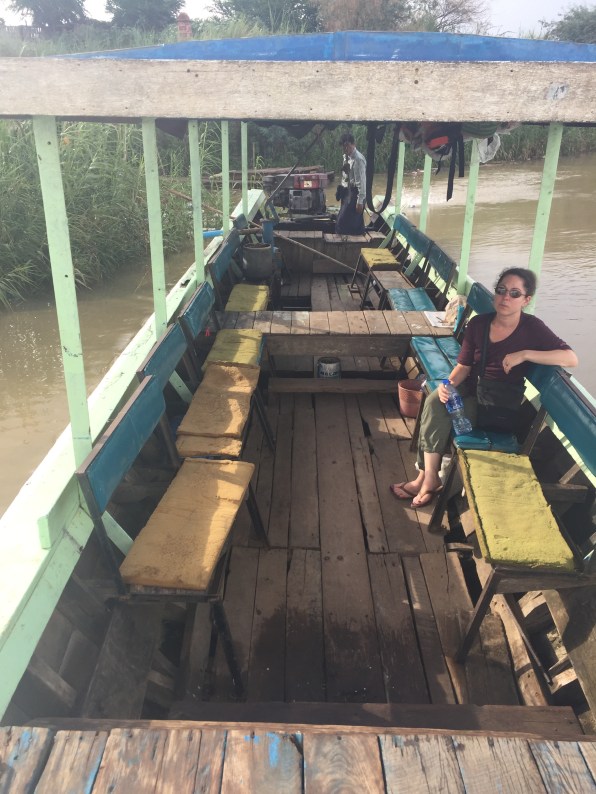
Inwa – The capital of Burma from the 14th-19th Centuries, Inwa was a well-protected capital city. Located at the fork of two rivers, the rulers used natural barriers to provide protection. Unfortunately, the capital cities aren’t well preserved as each successive ruler disassembled and moved the royal buildings or used their teak structures to make new temples, monasteries or palaces. Part of the fun was the journey to and from the island. First, we took a short ferry ride to cross the river and then a horse carriage around the island to see the sights.

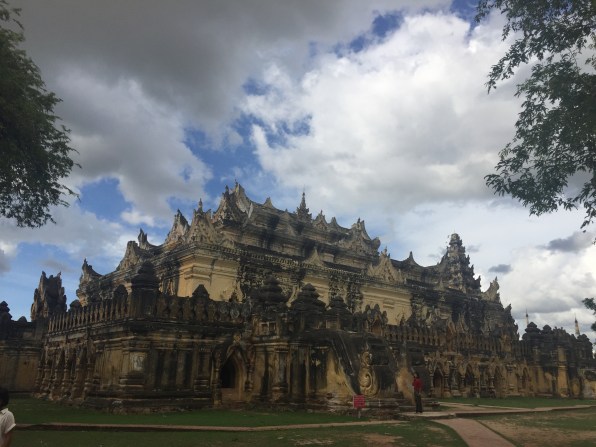
The main tourist attraction was a monastery built in the early 19th Century by the Chief Queen to the reigning King. The Brick Monastery used more modern materials to replicate the teak monasteries that we’d seen previously. Its absolutely massive and provided excellent coverage as a cloud burst let loose as we were inside the monastery. Only 10-15 minutes in duration, the violence of the passing storm can’t be understated.
Inle Lake/Taunggyi
So now we’re in The Shan State. If you’ve ever seen the Burma special that Top Gear of the BBC did, then you know what we’re talking about. We’re starting to get out of the flood plains of southern Myanmar and starting to feel the impact of the eastern tail of the Himalayas. That means mountains, glaciers and big lakes. We didn’t go far north to see or feel the real mountainous peaks, but we did see the impact of the rivers and lakes.
We landed at the airport, rented a taxi for the day and went to Taunggyi. The day turned out more spectacularly than our wildest dreams. We stopped in Taunggyi to pick up a tourist pass for the region and a local guide from the Pao tribe. This is important, and we’ll explain why in a second.
Our first stop was the Kakku Pagodas. After driving for more than 2 hours, we arrived at a bit of a wonderous place. The Kakku Pagodas were first started in the 3rd Century BC by King Asoka of India (there is some debate whether King Asoka himself came or just representatives from his court came to Myanmar). The rest were completed over time and reached a peak of 7500 stupas. Today only 2478 remain due to earthquakes and windstorms.
King Asoka was a Hindu King who converted to Buddhism and helped to spread the philosophy around South East Asia. King Asoka is also famous for being the first opposition to Alexander the Great that repulsed the expansion of the Macedonian/Greek empire (in fact, Alexander died shortly after leaving India). S has long been fascinated by Alexander the Great. If you read our Bourdain piece, then you’ll understand when we say that Alexander has the second of the four seats at S’s dream table. Both being great questioners and famous for their open minds, Alexander and Tony would be fast friends.
Oh yeah, the photos…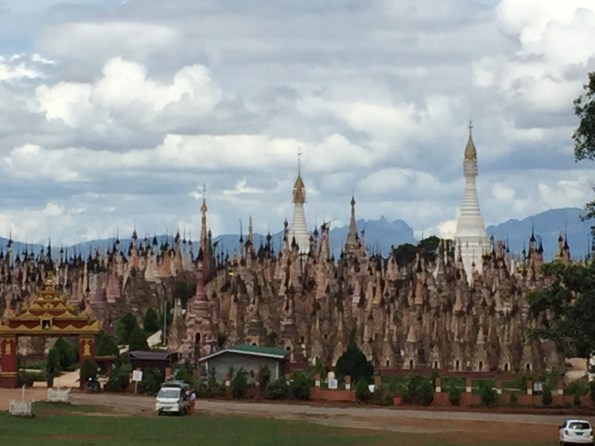
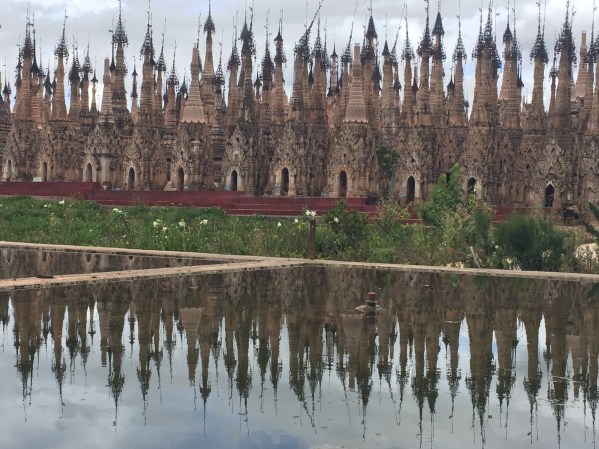
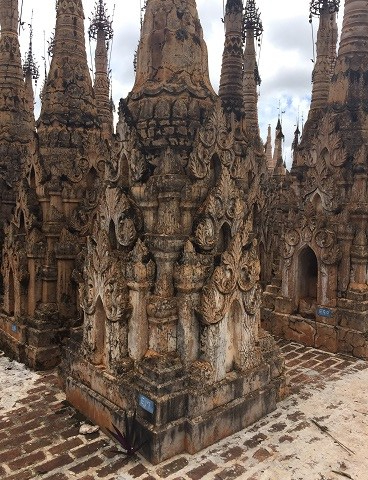
The decorations are on the stupas are fun and imaginative…

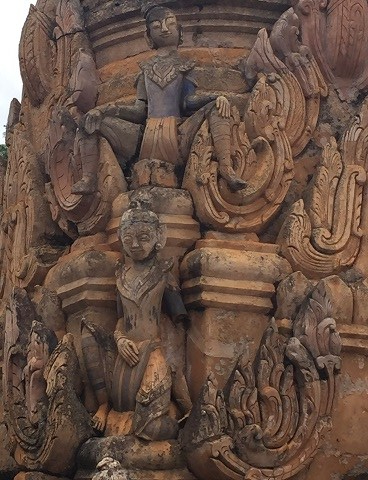

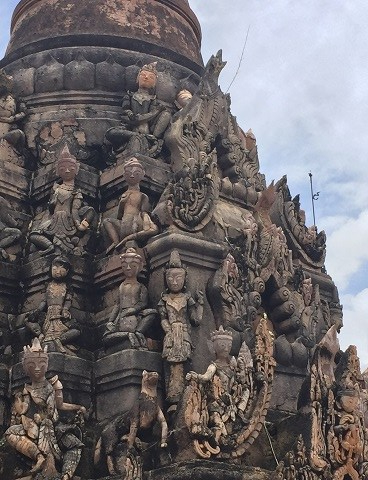
This is the original stupa built by King Asoka…
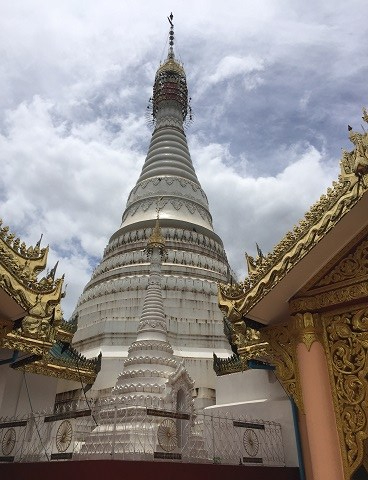
An adornment on a stupa…representing a Pao male in proper headdress and a Pao female with headdress (a dragon to represent that the Pao believe they descended from dragons).

After we left Kakku, we felt sated. Like we’d lived what we were supposed to see that day. However, in talking with our Pao guide, he mentioned this day was the last day of the rocket festival. Say what? In a hasty negotiation that involved us paying more to our driver, our guide took us to the ROCKET FESTIVAL. The Pao people are farmers. They need rain for a bountiful harvest. In hopes of a good rainy season, they launch rockets into the sky as a tribute to the rain and sky gods. Mostly it’s a party of food, beer and ROCKETS!
We were the only non-locals at the event. That meant lots of pointing and staring, high fives and thumbs up. People generously moved out of the way to give us a better view of the events
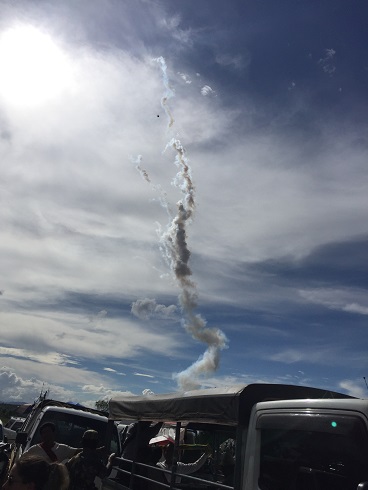
As we walked from the parking spot to the festival, we saw food stalls, clothing shops….Woosh! What was that! A rocket trail…
What else they do they sell here…oh I see…
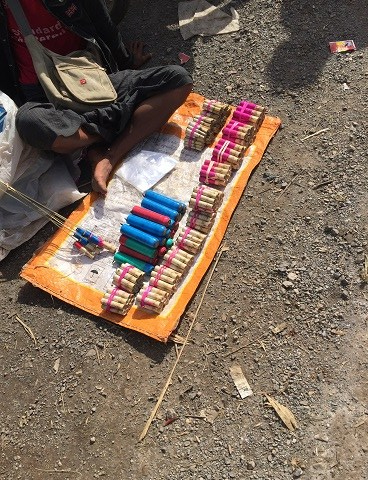
Is that what we’re here to see?…nope…this is…
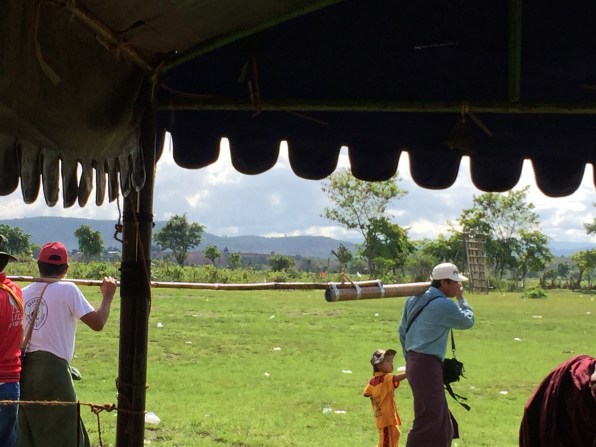
The picture doesn’t do it justice. It’s a rocket strapped to a long piece of bamboo. It takes 4 people to carry. Holy snap!
OK, build up over. This is what we came to see, and we caught it on video!!
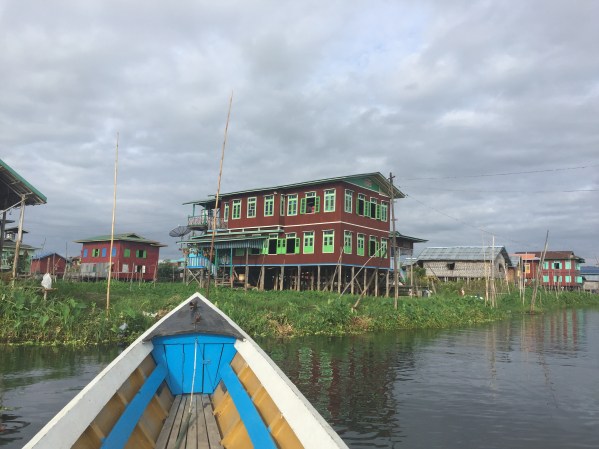
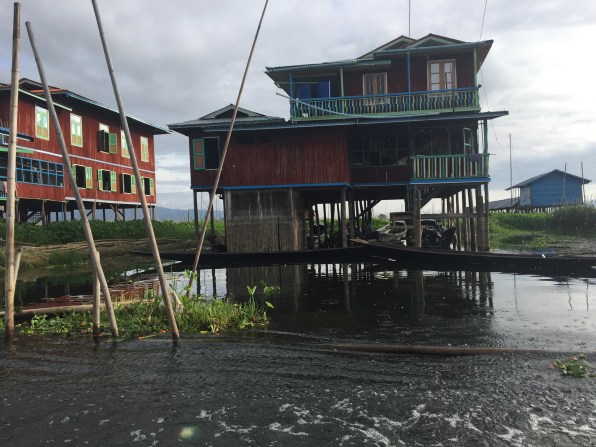
After a good night’s rest, we got up at 4am to meet our boat driver so we could walk to the jetty and get in our long boat. We had to get an early start to watch sunrise as we (coincidentally) looked towards the backside of the hills on which Kakku was built. The lake features many wonderful examples of pagodas, temples and monasteries. But what makes the lake so special is how people have chosen to live on the lake. They fish in the lake, but they grow crops on top of the lake. They build houses on stilts in the lake, they take their kids to school on long boats and they visit floating markets for produce and other supplies.
The locals use weeds and plants that grow up from the lake bed on which to build seed beds and grow crops like tomatoes, squash and other vegetables for sale.
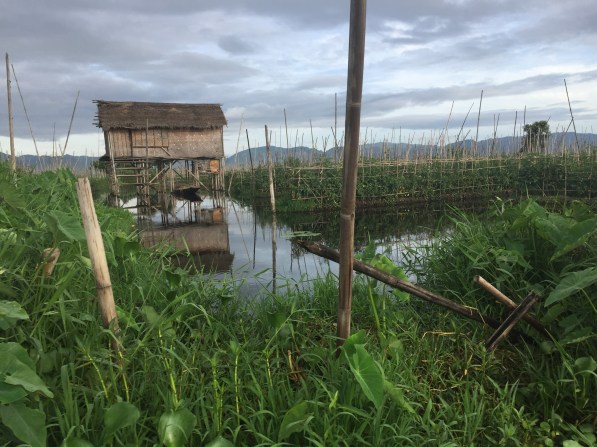
Homes built on stilts…
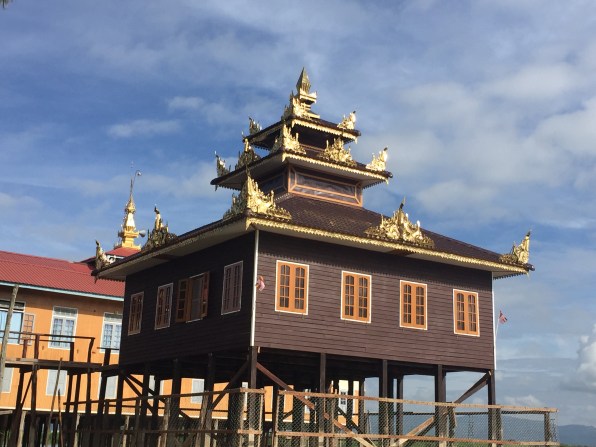
We don’t know what this building is but it’s too beautiful to leave out.
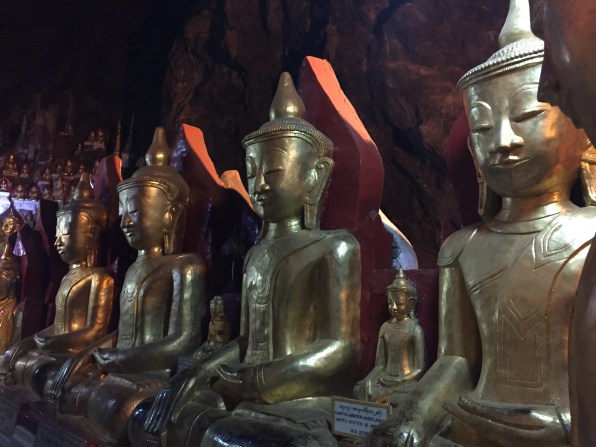
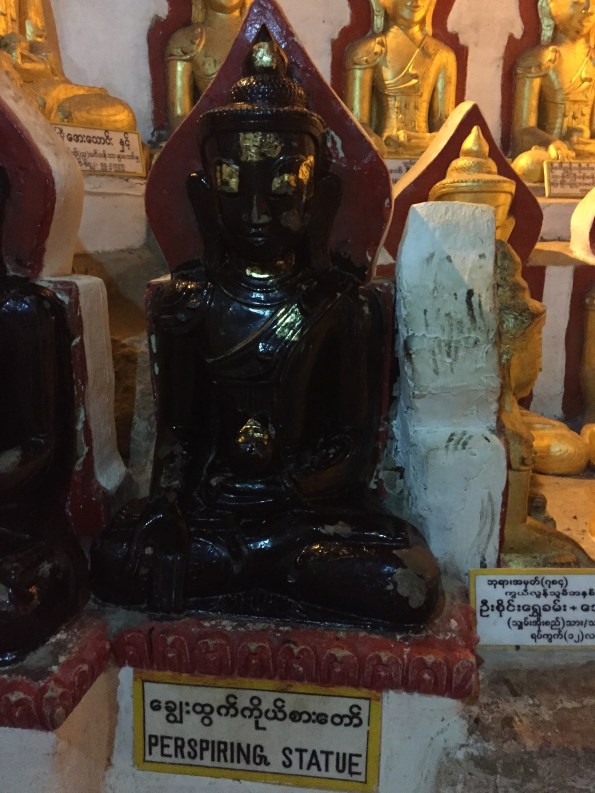
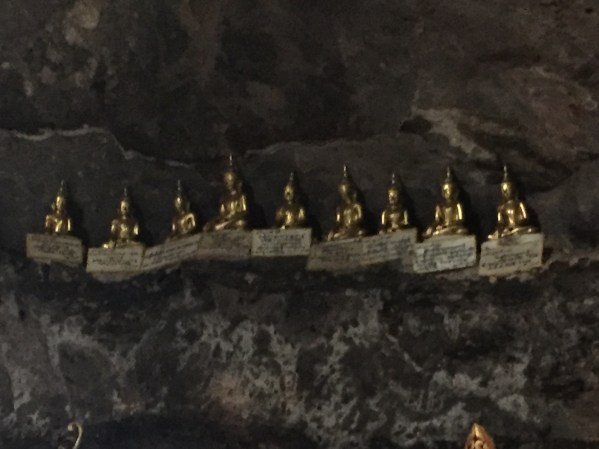
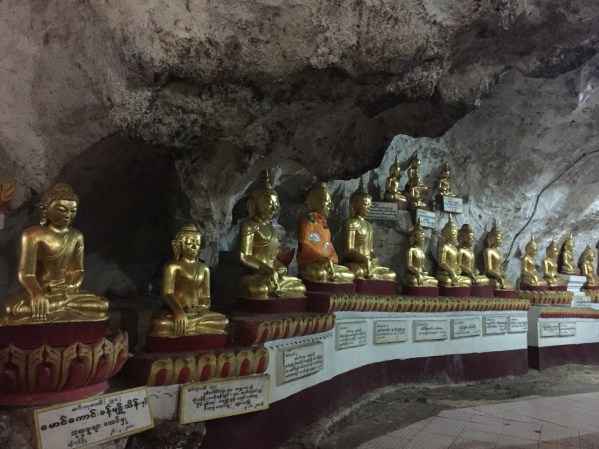
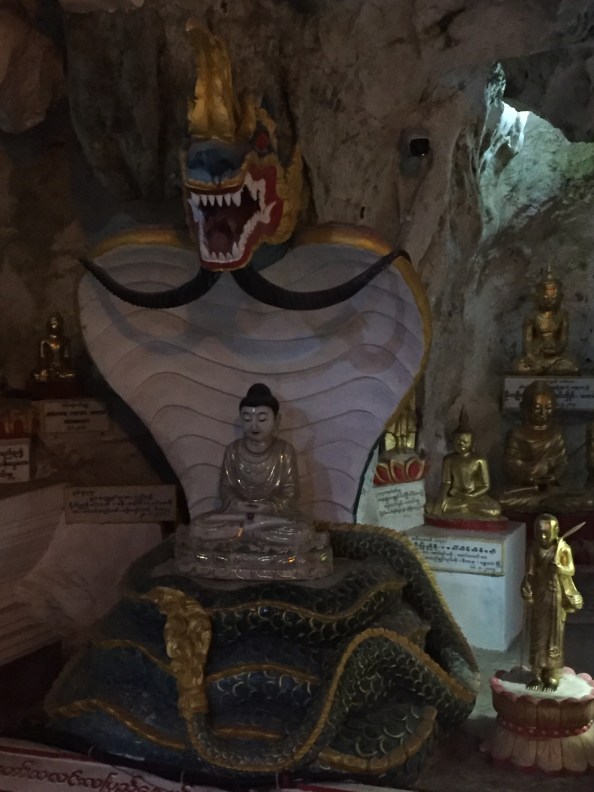
Before we headed to the airport the next day, we got an early start and headed to Pindaya Caves. This was the last thing we did in Myanmar and we think it tied our whole experience together wonderfully. Nobody is quite sure why, but people have been donating and sending Buddha statues for display in this cave for hundreds of years from all over the world. It’s become a must visit pilgrimage site in Myanmar and makes for a pretty good tourist destination as well. The statues are of all different sizes and literally wedged into every nook and cranny of the cave.
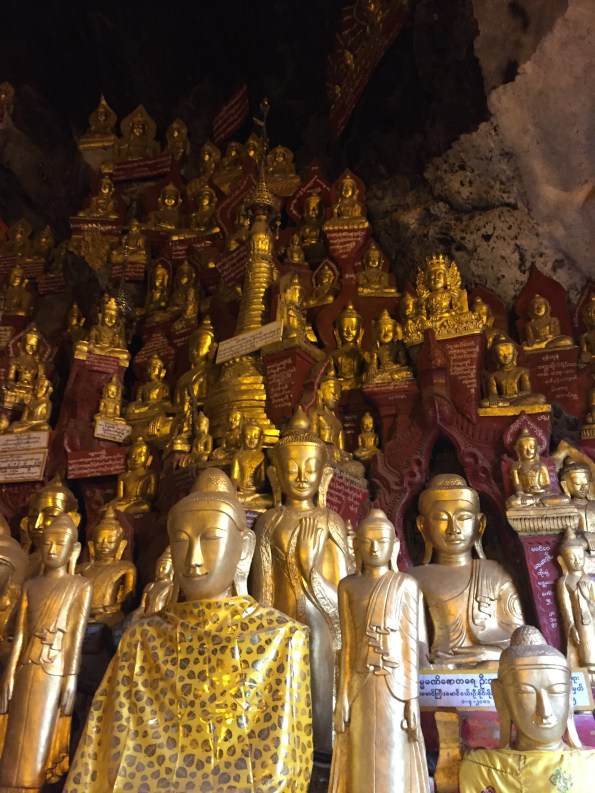
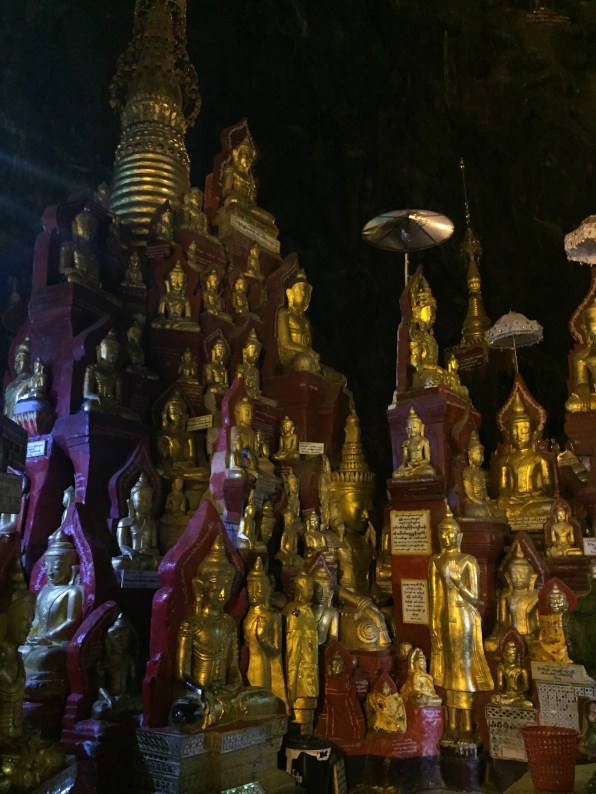
Some are little…

Some are big…
Some have water condense on them (known as perspiring Buddha)…
Some are high up…
Some are down low…
And some have unique pedestals…
So that’s it, a summary of our trip in 70 photos. These photos and commentary will never fully paint the picture of how beautiful Myanmar is. We hope that you enjoyed this post and that it inspires you to go to Myanmar. It’s worth your time. Believe us!
 Wearehere